

Real news, real insights – for small businesses who want to understand what’s happening and why it matters.
The "Never Lose a Client Again" Strategy: Why Your StoryBrand Hero Is Ghosting You
By Vicky Sidler | Published 3 May 2026 at 12:00 GMT+2
Have you ever successfully closed a massive deal, popped a moderately priced bottle of prosecco, and patted yourself on the back, completely oblivious to the fact that your new client is currently hyperventilating with buyer’s remorse?
If you are trying to use the StoryBrand framework to grow your business, you already know that your customer is the Hero, and you are supposed to be the Guide. But there is a massive, systemic flaw in how most founders actually execute this. You act like the Guide who takes the Hero's money at the edge of the dark forest, hands them a generic PDF, and says, "Good luck with the dragon, I've got another sales call!"
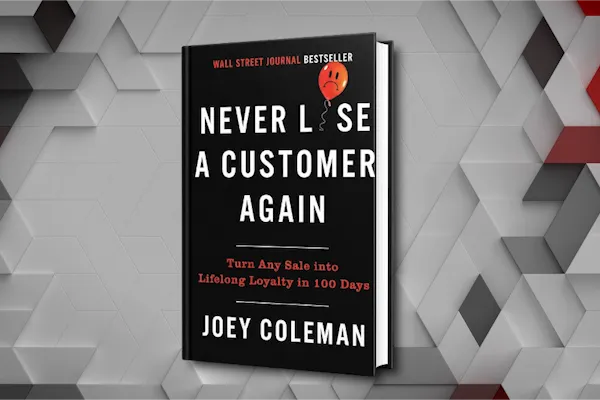
You are building a business designed to "chase," but you have absolutely no infrastructure to "catch." This is the core thesis of the brilliant book Never Lose a Client Again By Joey Coleman. Coleman exposes the brutal reality that up to 70% of new clients vanish within the first 100 days because businesses treat human beings like sterile B2B transactions. If you are tired of pouring marketing budget into a leaky bucket, we need to look at the psychology of post-sale panic, and why being a true StoryBrand Guide means your real job doesn't start until the contract is signed.
TL;DR:
The ultimate Never Lose a Client Again By Joey Coleman Summary reveals that between 20% and 70% of new clients leave within the first 100 days because they experience massive "buyer's remorse."
While you are feeling "euphoria" after closing a sale, your client is stuck in the "Quiet Zone"—a void of anxiety and doubt that destroys trust if you do not proactively fill it.
A true StoryBrand Guide doesn't vanish after the transaction. You must guide your client through the 8 phases of loyalty, moving them from a skeptical buyer to a lifelong advocate.
👉 If you are bleeding clients because your post-sale communication is a generic, automated mess, your entire marketing funnel is useless. You must establish secure, undeniable authority from day one. Download the 5-Minute Marketing Fix to craft a powerful StoryBrand One-Liner that perfectly sets your client's expectations, so you don't lose them in the first 100 days.
Table of Contents:
The "Never Lose a Client Again" Strategy: Why Your StoryBrand Hero Is Ghosting You
The "Leaky Bucket" Corporate Crisis
The 8 Phases of Lifelong Loyalty
Stop Buying Branded Swag (And Start Guiding)
1. Why AI Search Is 60% Hallucination (And How To Be The Real StoryBrand Guide)
2. Why The Internet Is Drowning In AI Slop (And How To Keep Your StoryBrand Clean)
3. Why ChatGPT Is Literally Boiling Your StoryBrand Brain
4. Why AI Is Turning Your Customers Into Villains
5. Company of One by Paul Jarvis Summary: Why Scaling Will Kill Your Business
1. What is the main premise of "Never Lose a Client Again"?
2. What is the 100-day "Leaky Bucket" crisis?
3. What are the 8 phases of lifelong loyalty?
The "Leaky Bucket" Corporate Crisis
In the modern service industry, businesses spend an obscene amount of capital trying to drag strangers into their sales funnel, only to immediately ignore them the second they hand over their credit card.
The data on client loss is frankly terrifying. According to Coleman's research, across various industries, anywhere from 20% to 70% of new clients disappear within the first 100 days. In the banking sector, nearly a third of new customers leave within the first year, and half of those departures happen in that crucial 100-day window. Every time you lose a client in this phase, you aren't just losing recurring revenue; you are incinerating the sunk cost of acquiring them in the first place. You are frantically pouring water into a bucket that has no bottom.
To stop this hemorrhaging, you have to abandon the sterile, robotic concepts of "B2B" (Business-to-Business) and embrace "H2H" (Human-to-Human). In a world where your competitors are only an AI or Google search away, the only true differentiator is the experience. Your clients aren't just buying a service; they are buying a better version of themselves. If you treat them like a line item on a spreadsheet, they will leave you for someone who actually treats them like a human being.
Before we dive into how to fix this emotional disconnect, let's look at exactly how much cash is pouring out of the holes in your boat. I've built a quick diagnostic calculator based on Coleman's 100-day churn metrics so you can see the actual financial damage of ignoring your clients post-sale.
The 8 Phases of Lifelong Loyalty
Traditional marketing funnels end at the "decision" phase, which is exactly why traditional marketing is broken. The human emotional journey doesn't end when the invoice is paid; that is actually when the panic sets in.
When a contract is signed, you experience a massive hit of dopamine. You feel euphoria. Your client, however, experiences immediate buyer’s remorse—a toxic cocktail of fear, doubt, and financial anxiety. To survive this, Coleman outlines the Eight Phases of Lifelong Loyalty. It starts with the Assess, Admit, and Affirm phases, where you must counteract the terrifying "Quiet Zone" between purchase and delivery. Instead of sending a sterile, automated receipt, you have to do something remarkable to reassure them they made the right choice.
From there, you move into Activate, Acclimate, and Accomplish. This is where you actually deliver the result while holding their hand through the overwhelm of new systems. If you do this correctly, you reach the final phases: Adopt and Advocate. This is the holy grail where the client becomes part of your tribe and acts as an unpaid marketing force. But you cannot ask for a referral if you haven't earned the right by guiding them through the first six phases flawlessly.
Stop Buying Branded Swag (And Start Guiding)
If your idea of client retention is mailing out a cheap, plastic coffee mug with your logo plastered across the side, you fundamentally misunderstand human psychology.
Coleman points out a brilliant rule for the "Presents" channel of communication: a gift should be personalized to the client's actual interests, not your branding ego. A corporate-branded pen isn't a gift; it’s a marketing chore you are forcing them to keep on their desk. Sending a handwritten note or an informal, unpolished video message signals that you were willing to slow down and use your actual human energy to prove they matter.
As a certified StoryBrand expert, I can tell you that the Guide's job is to protect the Hero. You cannot protect them if you ghost them. Success in the modern service profession does not require a multi-million-dollar tech stack; it simply requires the will to lift your foot and step over the incredibly low bar of standard corporate apathy.
You need an urgent, structural fix to your messaging so your clients know exactly what to expect before the buyer's remorse even kicks in. Get my 5-Minute Marketing Fix. It acts as a rapid diagnostic tool to help you craft a crystal-clear StoryBrand One-Liner, giving you a secure, undeniable brand message that sets the foundation for lifelong loyalty, right from day one.
👉 Stop losing sales. Download the fix now.
Related Articles:
1. Why AI Search Is 60% Hallucination (And How To Be The Real StoryBrand Guide)
If you think your client onboarding is confusing, imagine relying on an AI search engine that is wrong 60% of the time. Discover why being a deeply human, accurate Guide is your only competitive advantage against hallucinating robots.
2. Why The Internet Is Drowning In AI Slop (And How To Keep Your StoryBrand Clean)
If you try to automate your first 100 days using AI-generated emails, you will just become part of the "slop." Read the Stanford study proving that generic corporate text actively destroys consumer trust and constraints creativity.
3. Why ChatGPT Is Literally Boiling Your StoryBrand Brain
Creating a remarkable client experience requires deep cognitive effort. Discover the terrifying science behind how outsourcing your marketing brain to AI makes you too mentally lazy to actually care about your customers.
4. Why AI Is Turning Your Customers Into Villains
When you use automated systems to onboard clients, you create "moral distance." Explore the Nature study proving that people are 20% more likely to lie, cheat, and ghost you when they are dealing with a machine instead of a human.
5. Company of One by Paul Jarvis Summary: Why Scaling Will Kill Your Business
The leaky bucket crisis happens because businesses are obsessed with blind growth. Learn why "intentional smallness" allows you to actually focus on the 100-day client experience instead of endlessly chasing new leads.
FAQs:
1. What is the main premise of "Never Lose a Client Again"?
Joey Coleman's book argues that businesses spend too much time and money acquiring new clients and completely neglect the post-sale experience. This neglect causes a massive churn rate within the first 100 days, destroying long-term profitability.
2. What is the 100-day "Leaky Bucket" crisis?
Research shows that between 20% and 70% of new clients leave a business within the first 100 days of signing a contract. Businesses are pouring new leads into a "leaky bucket" because they fail to manage the client's post-purchase emotional journey.
3. What are the 8 phases of lifelong loyalty?
Coleman outlines the client journey in eight phases: Assess, Admit, Affirm, Activate, Acclimate, Accomplish, Adopt, and Advocate. A business must proactively guide a client through all eight phases to turn them into a lifelong referral engine.
4. What is the "Quiet Zone" in client retention?
The Quiet Zone is the terrifying void of silence between when a client signs a contract (or makes a payment) and when the service or product is actually delivered. It is the peak period for "buyer's remorse" and requires immediate, remarkable communication to fix.
5. How does this tie into the StoryBrand framework?
In StoryBrand, you are the Guide and the client is the Hero. Many businesses act as the Guide during the sales pitch, but abandon the Hero once the transaction is complete. You must maintain your Guide status throughout the entire 100-day implementation phase to ensure their success.


Strategic Marketing Tribe helps established service businesses turn underperforming marketing into more predictable growth with the Failure-Proof Marketing System.






Created with clarity (and coffee)