
Real news, real insights – for small businesses who want to understand what’s happening and why it matters.

Storytelling Beats Coding in the AI Economy
By Vicky Sidler | Published 21 December 2025 at 12:00 GMT+2
There was a time when kids were told that if they just learned to code, their financial future was secure. But according to the latest data, those same kids are now sitting at home wondering why their inbox is full of job rejections and Spotify playlists generated by an AI pretending to be a band. Meanwhile, the soft skills we were told to dismiss? They’re now leading the charge.
A recent update by Joe Lazer outlines what’s really happening in the AI economy—and why storytelling is quietly taking the crown.
TL;DR:
AI is improving faster at coding than writing
Storytelling, empathy, and communication are now the most in-demand business skills
AI-generated writing is often distrusted or disliked, even when it’s decent
Investment and culture favour technical automation, not emotional nuance
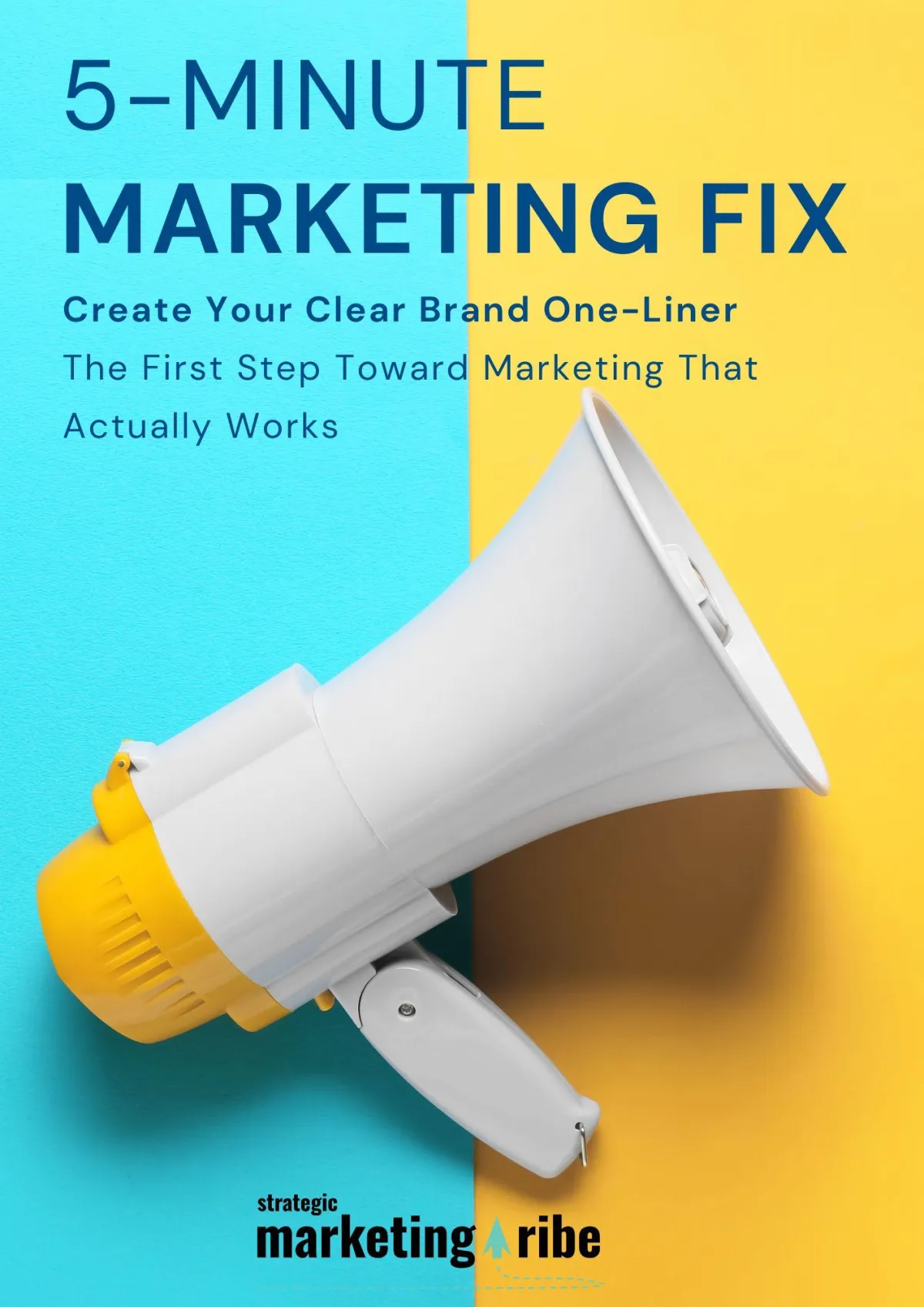
👉 Need help getting your message right? Download the 5-Minute Marketing Fix.
Table of Contents:
Storytelling Beats Coding in the AI Economy
The False Alarm That Writers Were Done:
Why AI Is Better at Coding Than Writing:
Higher ROI on Coding Automation:
The Unexpected Rise of Storytelling:
Why Storytelling Matters Now More Than Ever:
What This Means For Small Businesses:
1. OpenAI’s $27B Loss Could Tank the Whole AI Industry
2. Map Content to the Customer Journey for Better Results
3. Ideal Client Profile: The Marketing Shortcut Small Businesses Miss
4. Brand Guidelines Build Trust and Recognition
5. 10 Best Content Types for Small Business Marketing
Frequently Asked Questions About Storytelling in the AI Economy
1. Is storytelling really more valuable than coding now?
2. Why is AI better at coding than writing?
3. What’s the problem with using AI for writing?
4. Isn’t writing a low-value skill compared to technical ones?
5. What kinds of businesses benefit from storytelling?
6. Is it still worth learning to code?
7. How do I improve my storytelling as a business owner?
8. Can I use AI to help with storytelling?
9. What’s a practical first step to improve my business messaging?
The False Alarm That Writers Were Done:
When ChatGPT first launched, everyone panicked that writing jobs were over. AI could generate emails, blogs, and ads. And not terribly. For many, it felt like the moment human writers were replaced.
But something strange happened. While AI kept getting better at coding, its writing skills hit a plateau. It became clear that AI could spit out business copy like an over-caffeinated intern named Brett, but anything beyond that? Not so much.
That’s because good writing isn’t about typing. It’s about thinking. And thinking isn’t easy to automate.
Why AI Is Better at Coding Than Writing:
Better Training Data:
AI models are trained on existing data. Coding forums like Stack Overflow, GitHub, and documentation sites are full of clean, functional examples. In contrast, the internet is cluttered with marketing speak, fluff, and enough jargon to make your eyes bleed.
So while AI learns clean logic from code, it learns rambling nonsense from poorly written blogs and posts. As a result, the average AI coder is sharper than the average AI writer.
Clearer Success Criteria:
With code, there’s a simple test. Does it run? If yes, success. If not, try again.
With writing, what counts as “good” is subjective. Did it make someone laugh? Did it explain something well? Did it connect? AI doesn’t know. So it hedges. It adds extra words. It mimics what sounds smart. It rambles like a student bluffing their way through a book report.
Higher ROI on Coding Automation:
Let’s be blunt. Replacing a copywriter saves a company a few thousand. Replacing a team of software engineers? That’s millions.
That’s why CEOs like Zuckerberg, Altman, and Jassy are pouring money into making AI better at code. The future they’re betting on is one where AI handles technical work, and humans handle relationships.
Why We Distrust AI Writing:
Here’s where it gets cultural. Study after study shows that when people think something was written by AI, they don’t like it—even when the quality is fine.
In one example, readers were shown two identical stories. One was labeled as human-written, the other as AI-generated. The AI-labeled one scored lower every time.
We’re not just evaluating quality. We’re reacting to trust.
Brands that quietly sneak AI into their content (like J.Crew) are getting dragged online. Meanwhile, brands like Aerie that pledge not to use AI are seeing big boosts in engagement. There’s a shift happening. Consumers can feel the difference, and they care.
AI Slop vs Human Signal:
You’ve probably heard the term “AI slop.” It’s the growing mess of formulaic, repetitive, soulless content polluting the internet. And it’s only getting worse.
So here’s the opportunity: Not sounding like AI is now a superpower.
In a world where everything is generated, being intentional, thoughtful, and human stands out more than ever.
Where AI Is Headed:
According to usage data from platforms like ChatGPT and Anthropic, AI is now used more for coding than writing. The share of writing tasks dropped 33% in the last year. Coding tasks now dominate.
Big players are following the money. OpenAI, Anthropic, Amazon, and Meta are investing heavily in automating technical workflows. Think spreadsheets, analytics, and dev work.
The less they invest in creative writing models, the less progress AI will make in writing. That’s not speculation. It’s already happening.
The Unexpected Rise of Storytelling:
In contrast to the decline of coding jobs, soft skills are gaining value fast.
A LinkedIn-backed study found that AI could replace up to 96% of a software engineer’s current tasks. But what can’t it replace? Skills like communication, leadership, and empathy.
The World Economic Forum’s 2025 report confirmed it. The five most in-demand business skills are all “soft.” AI and coding ranked 11th and 23rd. That’s behind things like creative thinking and even manual dexterity.
This is the plot twist no one saw coming.
Why Storytelling Matters Now More Than Ever:
Storytelling isn’t just about content. It’s about connection. It’s how we persuade, explain, relate, and lead.
Neuroscience backs this up. When you hear a story, your brain starts to mirror the storyteller’s. It’s called neural coupling, and it builds trust and emotional resonance in a way no bullet point ever could.
In short, storytelling makes people care.
And in a market full of noise, people only buy from brands they trust.
What This Means For Small Businesses:
You don’t need a technical edge to succeed in 2026. You need a clear voice. You need to sound like you care. And you need to communicate like a human, not a chatbot.
If you’ve been ignoring writing because you thought it was being replaced, now’s the time to lean back in. Tell your story. Connect with your audience. And remember that your ability to speak clearly, honestly, and emotionally is not just safe from AI.
It’s the most future-proof skill you have.
Need help telling your business story simply and clearly? That’s where my 5-Minute Marketing Fix comes in. It will help you create one simple sentence that explains what you do and why it matters.
Related Articles:
1. OpenAI’s $27B Loss Could Tank the Whole AI Industry
If storytelling feels more secure than technical skills, here’s the financial reason why. This article shows how AI’s most hyped players are bleeding money, making soft skills a much safer long-term investment.
2. Map Content to the Customer Journey for Better Results
Telling stories is one thing. Telling the right story at the right time? That’s what moves leads to action. This guide helps you pair storytelling with strategy using the Marketing Hourglass.
3. Ideal Client Profile: The Marketing Shortcut Small Businesses Miss
You can't connect with everyone. This post shows how to define your audience so your storytelling actually lands—and attracts people who care.
4. Brand Guidelines Build Trust and Recognition
If your goal is to sound more human than AI, brand guidelines are your secret weapon. This post helps you document your voice so you stay consistent—even when you delegate.
5. 10 Best Content Types for Small Business Marketing
Ready to put storytelling into action? This article breaks down which content types deliver the most value for small businesses—and how to use each one strategically.
Frequently Asked Questions About Storytelling in the AI Economy
1. Is storytelling really more valuable than coding now?
For many roles, yes. AI is improving faster at technical tasks like coding, while soft skills like storytelling, leadership, and communication are becoming harder to automate and more in demand.
2. Why is AI better at coding than writing?
Because coding has clear success criteria. If code works, it's right. Writing is more subjective and harder to train for. Plus, coding data is cleaner than most internet writing.
3. What’s the problem with using AI for writing?
AI writing often sounds formulaic or impersonal. Studies show that even when AI-generated content is decent, people dislike it if they think it wasn’t written by a human.
4. Isn’t writing a low-value skill compared to technical ones?
Not anymore. Research shows that communication, critical thinking, and empathy are now ranked higher than coding on lists of the most valuable business skills.
5. What kinds of businesses benefit from storytelling?
All of them. Service businesses especially, where trust and connection drive sales. A clear, engaging brand story builds loyalty and makes you stand out from the AI-generated noise.
6. Is it still worth learning to code?
Technical skills are still useful, but they’re no longer future-proof. Combining technical understanding with human communication and business insight is now the winning combo.
7. How do I improve my storytelling as a business owner?
Start by clarifying your message. Know who you serve, what problem you solve, and how you make life better. Then practice sharing real stories that reflect that.
8. Can I use AI to help with storytelling?
Yes, but use it as an assistant, not the author. You bring the emotion, relevance, and perspective. AI can help organise ideas, not replace your voice.
9. What’s a practical first step to improve my business messaging?
Download the 5 Minute Marketing Fix. It walks you through creating one clear sentence that captures what you do and why it matters.
10. Will this trend last, or is it just another hype cycle?
Storytelling has been a core part of human communication for thousands of years. In an AI-heavy world, the ability to connect emotionally is only becoming more valuable. This is not a trend—it’s a shift.

Strategic Marketing Tribe helps established service businesses turn underperforming marketing into more predictable growth with the Failure-Proof Marketing System.






Created with clarity (and coffee)