
STORY, MEET STRATEGY
Let’s make marketing feel less robotic and more real.
Find resources that bring your message—and your business—to life.

2025 Marketing Year in Review: What Actually Worked
By Vicky Sidler | Published 31 December 2025 at 12:00 GMT+2
It’s the last day of the year, and if 2025 felt like the year that marketing finally stopped pretending everything was simple, you are not wrong.
This was the year where a lot of comfortable ideas quietly stopped working, and a few boring but reliable ones started winning again.
Small business owners felt this first. Big brands can afford to chase shiny things for a year or two. Smaller businesses feel it immediately when something stops pulling its weight. By December, most owners were asking the same question. What actually worked this year, and what should I stop carrying into 2026?
This article pulls the signal from the noise. No hype. No trends that only work if you have a Netflix-sized budget. Just the real patterns that showed up again and again.
TL;DR:
Brand marketing came back because performance alone hit a ceiling
Search changed fast thanks to AI overviews and social search
Personalisation became expected, not impressive
Authentic content beat polished content
Small businesses outperformed big ones by moving faster
Email and local marketing quietly delivered the best ROI
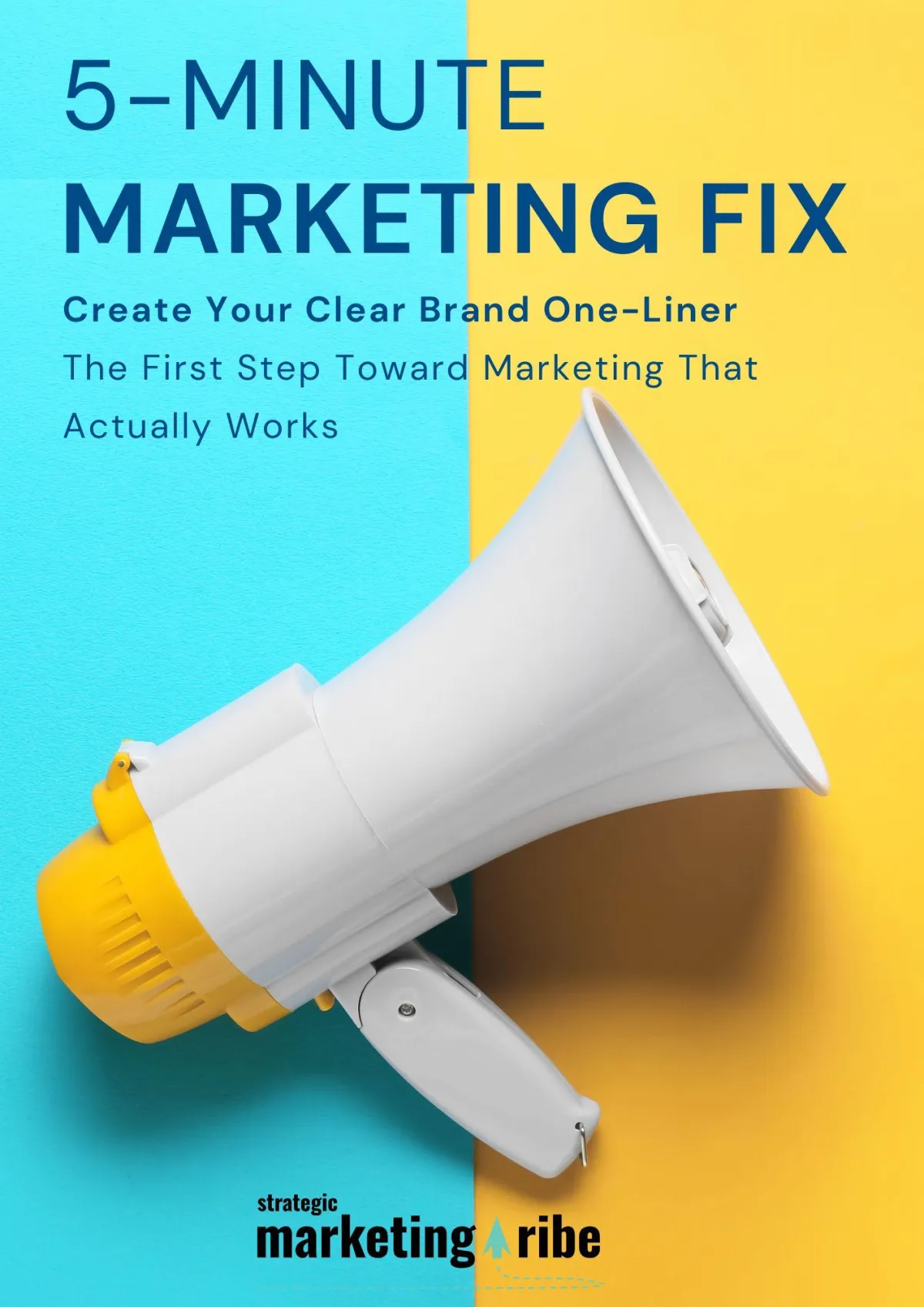
👉 Need help getting your message right? Download the 5-Minute Marketing Fix.
Table of Contents:
2025 Marketing Year in Review: What Actually Worked
The Big Marketing Shifts That Defined 2025:
1. Brand Marketing Quietly Made a Comeback:
2. Search Stopped Being Just SEO:
3. Personalization Became Normal:
What Actually Won for Small Businesses:
The Biggest Lesson of the Year:
1. AI Search Is Replacing Google Traffic Faster Than You Think
2. Influencer Marketing ROI in 2025 Why It’s Still Winning
3. Marketing Hourglass Explained A Smarter Way to Grow Your Small Business
4. Brand Guidelines for Small Business
5. Content Marketing Boosts Revenue More Than Ads
Frequently Asked Questions About 2025 Marketing Trends
1. Why did brand marketing matter again in 2025?
2. What does it mean that search is no longer just SEO?
3. Do small businesses really need to worry about AI search and GEO?
4. Why did authenticity outperform polished marketing content?
5. What type of marketing delivered the best ROI for small businesses in 2025?
6. Did paid advertising stop working in 2025?
7. Why did smaller businesses sometimes outperform larger brands?
8. What should small business owners stop doing after 2025?
9. What is the single biggest marketing lesson from 2025?
10. What is the smartest marketing move to start 2026 strong?
The Big Marketing Shifts That Defined 2025:
Before we talk tactics, it helps to zoom out. These shifts shaped almost everything that followed.
1. Brand Marketing Quietly Made a Comeback:
For years, marketing advice sounded like a spreadsheet. Track every click. Optimize every funnel step. Measure everything to death.
In 2025, many businesses discovered the limit of that thinking. Performance ads still worked, but returns flattened. Costs went up. Attention went down.
So brands did something radical. They started telling stories again. TV campaigns returned. Experiential events showed up. Even small brands invested in message clarity instead of endless optimization.
The lesson for small businesses was simple. You still need performance marketing. But without a clear brand story, it struggles to scale.
2. Search Stopped Being Just SEO:
Search did not disappear in 2025. It changed shape.
Google’s AI Overviews meant people got answers without clicking. At the same time, TikTok, Instagram, and YouTube became default search engines for products and services.
This shift introduced a new idea. GEO or generative engine optimization. In plain English, this means your business needs to be clear, credible, and consistent enough to be trusted by humans and machines.
Keyword stuffing did not win. Original insights did. Clear positioning did. Businesses that explained things simply were surfaced more often than those trying to sound clever.
3. Personalization Became Normal:
Using someone’s first name in an email stopped feeling personal about five years ago.
In 2025, real personalization meant content that adjusted to behavior, timing, and context. Brands with clean first-party data saw higher returns and lower acquisition costs.
For small businesses, this did not require fancy software. It often meant better email segmentation, clearer offers, and fewer generic broadcasts.
4. Authenticity Beat Polish:
Audiences became very good at spotting content made for algorithms instead of people.
Perfect visuals. Empty claims. Vague authority. These stalled.
What worked was proof. Real stories. Real data. Clear explanations of where claims came from. Authenticity stopped meaning casual tone and started meaning traceable truth.
What Actually Won for Small Businesses:
Once the big shifts settled, some familiar tools quietly outperformed everything else.
Email marketing remained the highest ROI channel, averaging around forty-two dollars for every dollar spent. This worked because email is direct, permission-based, and not owned by an algorithm.
Local SEO delivered consistent results as more people searched for services near them. Clear service pages and accurate listings mattered more than clever tricks.
Micro-influencer partnerships outperformed large influencer deals. Smaller audiences trusted people they recognized.
Paid social still worked when paired with a clear message. Ads did not fail because of platforms. They failed because the message was fuzzy.
Content marketing worked when focused. Not more content. Better content. One useful article beat ten forgettable posts.
What Did Not Work in 2025:
Some ideas simply lost momentum.
Generic brand positioning disappeared into the noise. Businesses that tried to sound like everyone else were ignored.
Overproduced content with no substance stalled. Polish without clarity did not convert.
Rigid quarterly plans struggled. Brands that waited three months to adjust were outpaced by those making small weekly changes.
Blind automation caused damage. Automating confusion only spreads it faster.
The Biggest Lesson of the Year:
After reviewing dozens of reports and real campaigns, one pattern stood out.
Clarity beat cleverness.
Businesses that could clearly explain what they do, who they help, and why it matters outperformed those chasing every trend. This is exactly why StoryBrand and Duct Tape Marketing principles held up so well in 2025. Clear message first. Then tactics.
What to Watch in 2026:
Expect search to keep fragmenting. Expect audiences to reward honesty over hype. Expect small businesses to keep winning through speed and focus.
The opportunity is not doing more marketing. It is doing less, better.
If you want a simple place to start, fix the sentence that explains your business. Everything else works better once that is clear.
Download the free 5 Minute Marketing Fix and get one clear sentence that makes your marketing easier in 2026.
Related Articles:
1. AI Search Is Replacing Google Traffic Faster Than You Think
If this year made search feel unpredictable, this article explains why. It breaks down AI overviews, zero click searches, and what small businesses can do to stay visible when Google stops sending traffic.
2. Influencer Marketing ROI in 2025 Why It’s Still Winning
You saw micro influencers outperform big names in 2025. This post shows the numbers behind that shift and gives a practical way to find partners who actually drive enquiries and sales.
3. Marketing Hourglass Explained A Smarter Way to Grow Your Small Business
If focused content worked better than random posting this year, this explains why. The Marketing Hourglass shows how to create content with a clear job instead of guessing what to post next.
4. Brand Guidelines for Small Business
Since brand marketing made a comeback, this article helps you do it properly. It explains how to build consistency and trust without sounding generic or overly polished.
5. Content Marketing Boosts Revenue More Than Ads
If your ad costs climbed while results flattened, this is the missing piece. It explains why owned content lowers acquisition costs over time and how small businesses can use it as a long term growth asset.
Frequently Asked Questions About 2025 Marketing Trends
1. Why did brand marketing matter again in 2025?
Performance marketing reached a ceiling for many businesses. Brand marketing helped rebuild trust, recall, and long term demand so performance tactics had something to amplify instead of carrying the full load alone.
2. What does it mean that search is no longer just SEO?
Search now happens across Google, AI tools, and social platforms like TikTok and YouTube. This means businesses need clear, helpful content that answers real questions, not just pages designed to rank for keywords.
3. Do small businesses really need to worry about AI search and GEO?
Yes, but not in a technical way. The safest approach is clarity and credibility. When your content is clear, specific, and useful, it is more likely to be referenced by AI systems and trusted by people.
4. Why did authenticity outperform polished marketing content?
Audiences became tired of content made for algorithms instead of people. Real examples, clear explanations, and proof of experience built more trust than highly produced content with vague claims.
5. What type of marketing delivered the best ROI for small businesses in 2025?
Email marketing, local search visibility, and focused content delivered the most consistent returns. These channels work because they are direct, owned, and less dependent on changing algorithms.
6. Did paid advertising stop working in 2025?
No, but it became less forgiving. Ads worked best when paired with a clear message and strong brand foundation. Without clarity, higher costs quickly erased returns.
7. Why did smaller businesses sometimes outperform larger brands?
Smaller businesses moved faster. They tested weekly, adjusted quickly, and responded to real data instead of sticking to rigid quarterly plans. Agility often beat scale.
8. What should small business owners stop doing after 2025?
Stop chasing every new platform or trend. Stop creating content without a clear purpose. And stop assuming automation will fix unclear messaging.
9. What is the single biggest marketing lesson from 2025?
Clarity beats cleverness. Businesses that clearly explained what they do, who they help, and why it matters consistently outperformed those trying to sound impressive or trendy.
10. What is the smartest marketing move to start 2026 strong?
Start by fixing your core message. When your positioning is clear, every channel performs better. A simple place to begin is the5-Minute Marketing Fix, which helps you clarify your message in one focused sentence.

Is your Marketing Message so confusing even your own mom doesn’t get it? Let's clarify your message—so everyone wants to work with you!






Created with clarity (and coffee)