
NEWS, MEET STRATEGY
Real news, real insights – for small businesses who want to understand what’s happening and why it matters.

Why Your Gray Hair Is Your Biggest Competitive Advantage In The AI Era
By Vicky Sidler | Published 18 March 2026 at 12:00 GMT+2
Are you secretly terrified that a twenty-two-year-old in a hoodie is going to use a free chatbot to completely destroy your consulting business?
According to an incredibly validating article by Joel Comm in Inc. Magazine, you are panicking over the exact wrong thing. Everywhere you look, younger founders are cranking out artificial intelligence apps in a matter of days, shipping products before you have even finished reading the user manual. It is incredibly easy to feel like you missed the boat because you do not know how to code.
But as Comm points out, this might actually be the very first technology wave in history where your age and experience are your real unfair advantage. Before you try to learn a complex programming language just to stay relevant, we need to look at why speed is highly overrated and why your expensive human judgment is the only thing that actually matters in an automated world.
TL;DR:
Previous tech revolutions rewarded people who could code faster, but artificial intelligence solely rewards people who know how to ask better questions based on decades of experience.
Young founders are moving incredibly fast, but speed without context just creates a massive amount of useless corporate noise.
AI is a basic strategy generator that carries absolutely no fiduciary responsibility, meaning your seasoned human judgment is your most valuable asset.
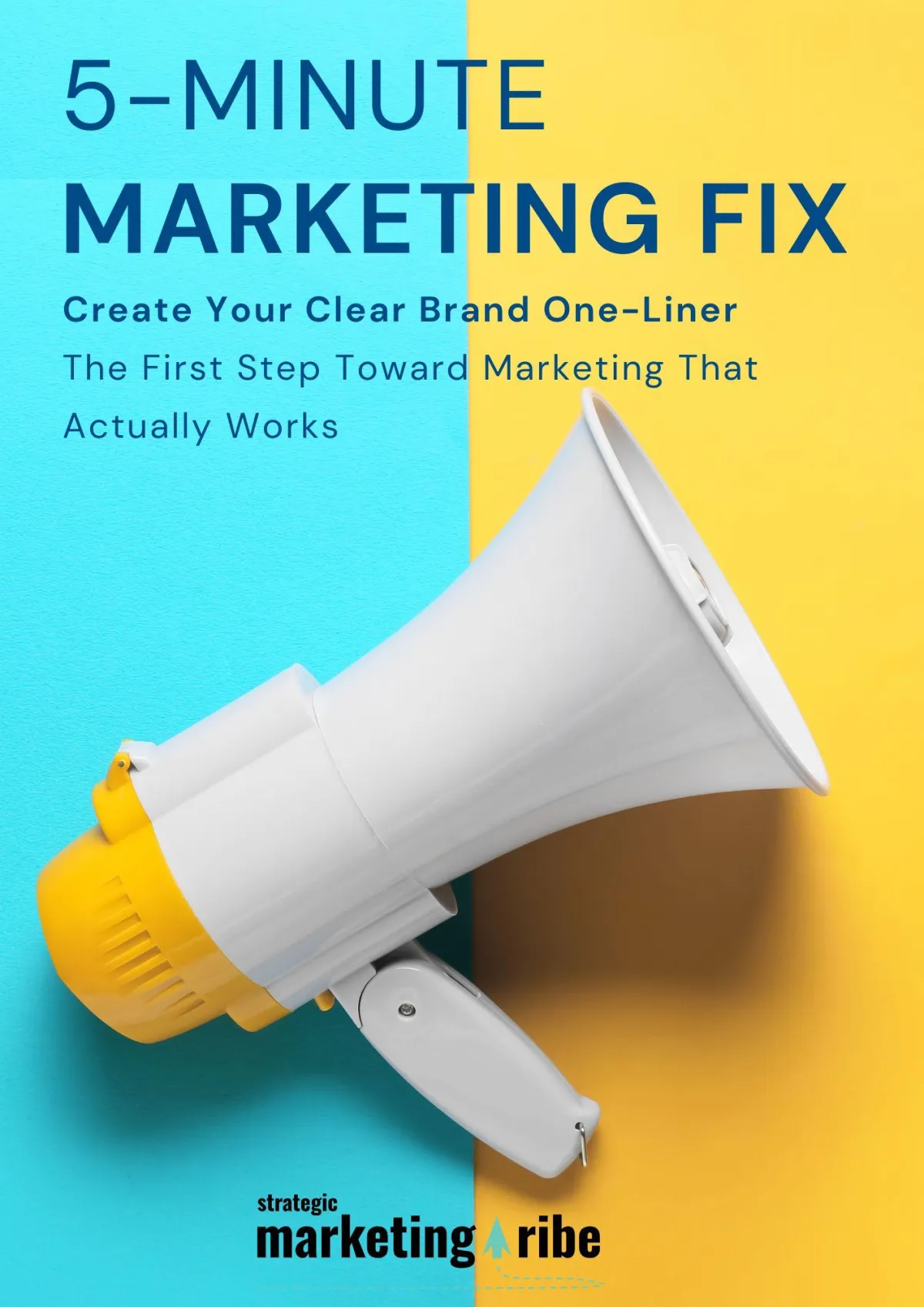
👉 If your decades of brilliant experience are hidden behind boring corporate jargon, that twenty-two-year-old is still going to steal your clients. Prove your undeniably human expertise by downloading the 5-Minute Marketing Fix to spot exactly where your messaging sounds robotic.
Table of Contents:
Why Your Gray Hair Is Your Biggest Competitive Advantage In The AI Era
Why Is The Speed Of Artificial Intelligence Actually A Massive Trap?
Why Is Pattern Recognition Better Than Technical Skill?
Why Is Outsourcing Your Brain A Fatal Corporate Mistake?
How Do You Actually Sell Your Expensive Human Judgment?
1. AI Is Changing Consulting Business Models Fast
2. Ideal Client Profile: The Marketing Shortcut Small Businesses Miss
3. AI Risks Explained: Why Experts Are Sounding the Alarm
4. Why 95% of AI Pilots Fail and What to Do Instead
5. AI Search Is Replacing Google Traffic Faster Than You Think
1. Why is being over 50 an advantage in the AI era?
2. Is technical skill still important for consultants?
3. Why shouldn't I use AI as a thought partner?
Why Is The Speed Of Artificial Intelligence Actually A Massive Trap?
It is incredibly exciting to watch startups move fast, but speed is ultimately meaningless if you are running in the wrong direction.
Previous tech revolutions heavily rewarded the people who could manipulate algorithms or master new digital platforms faster than everyone else. But as Comm notes, artificial intelligence is an entirely different beast. You do not need to learn a programming language; you just need to know how to ask better questions.
And asking better questions is not a technical skill. It is a highly refined judgment skill.
Why Is Pattern Recognition Better Than Technical Skill?
Because a robot cannot physically experience the pain of a bad decision.
The leverage in artificial intelligence does not come from typing prompts into a chatbox incredibly quickly. It comes from knowing exactly what matters, what does not matter, and what catastrophic consequences might follow your choices. That is called pattern recognition, and you can only build pattern recognition by surviving decades of expensive, painful mistakes.
You do not learn how to stress-test a business idea or identify operational blind spots by watching a YouTube tutorial. You learn it by actually running a business. But if the software is so smart, why can't we just trust its judgment?
Why Is Outsourcing Your Brain A Fatal Corporate Mistake?
Because algorithms do not care if you get sued.
There is a terrifying, subtle shift happening right now where corporate leaders are starting to treat chatbots like actual thought partners instead of basic strategy generators. Artificial intelligence is brilliant at predicting patterns, but it produces possibilities, not final decisions.
As Comm rightly points out, a language model does not carry any fiduciary responsibility. It does not understand complex internal office politics, it does not feel the sting of reputational damage, and it has absolutely no idea which risks are existential and which are merely cosmetic.
How Do You Actually Sell Your Expensive Human Judgment?
You have to stop competing on technical execution and start competing on precision.
The confidence gap between you and a tech-savvy startup founder is almost entirely psychological. Understanding how to use a software tool is not the same thing as understanding how to leverage it. If you deeply understand customer psychology, you can use the software to surface sales objections faster. If you understand complex operations, you can use it to reveal inefficiencies.
But if your marketing copy sounds like a generic algorithm wrote it, your potential clients will never actually get to experience your brilliant human judgment. They will assume you are just another automated fake and move on. You have to strip the robot-speak out of your funnels. Get my 5-Minute Marketing Fix. It helps you identify the exact spots where your messaging sounds like a hallucinating chatbot, so you can replace it with the undeniably human clarity your clients are actually willing to pay for.
👉 Stop losing sales. Download the fix now.
Related Articles:
1. AI Is Changing Consulting Business Models Fast
Now that you know your experience is your greatest advantage, you need to actually charge for it. This post zooms out to show how consulting business models are being completely restructured around that exact human judgment. Learn how to reposition your pricing so the artificial intelligence acts as your cheap assistant, not your primary deliverable.
2. Ideal Client Profile: The Marketing Shortcut Small Businesses Miss
If your decades of pattern recognition are your secret weapon, you need to aim that weapon at the right target. This guide shows you how to build a concrete Ideal Client Profile so you can leverage your massive industry experience to target the exact, hyper-specific fears of your absolute best-fit customers.
3. AI Risks Explained: Why Experts Are Sounding the Alarm
Joel Comm warned against outsourcing your brain because AI lacks fiduciary responsibility. This post dives much deeper into that exact problem, translating serious expert concerns into practical risk-management guidance. It will help you understand the actual strategic and ethical landmines that young, inexperienced founders are blindly running into.
4. Why 95% of AI Pilots Fail and What to Do Instead
If you are still intimidated by the sheer speed of young tech startups, read this immediately. It explains exactly why the vast majority of those lightning-fast artificial intelligence projects completely flop in the real world. It reinforces why your slow, methodical, "messy" human leadership and change-management skills still matter more than code.
5. AI Search Is Replacing Google Traffic Faster Than You Think
Your judgment is useless if no one can find your website. This article explains how artificial intelligence search models are aggressively changing online visibility. If you want your seasoned expertise to actually get seen by potential clients, you need to structure your content so these new search engines can easily surface your human authority.
FAQs:
1. Why is being over 50 an advantage in the AI era?
Previous tech revolutions required coding skills, but artificial intelligence simply requires you to ask better questions. Asking the right questions relies entirely on pattern recognition and judgment, which are skills built over decades of real-world business experience.
2. Is technical skill still important for consultants?
It is becoming significantly less important. As AI tools become more accessible and conversational, the barrier to entry lowers dramatically. When technical execution becomes cheap and easy, your strategic context and industry experience become your primary competitive differentiators.
3. Why shouldn't I use AI as a thought partner?
Artificial intelligence is a strategy generator that produces possibilities, but it lacks the human context required for final decisions. It does not carry fiduciary responsibility, understand complex office politics, or comprehend the nuances of reputational damage.
4. How do I leverage AI without learning to code?
You apply your existing expertise to guide the machine. If you understand customer psychology or business operations, you can use conversational prompts to have the AI stress-test your ideas, surface hidden objections, or find operational inefficiencies.
5. How do I convince clients to pay for my judgment?
You must ensure your marketing clearly highlights your distinct human personality and real-world experience. If your website uses generic corporate jargon, clients will assume you are using automated tools to do the work. You must sound undeniably human to justify premium pricing.


Is your Marketing Message so confusing even your own mom doesn’t get it? Let's clarify your message—so everyone wants to work with you!






Created with clarity (and coffee)