
Real news, real insights – for small businesses who want to understand what’s happening and why it matters.
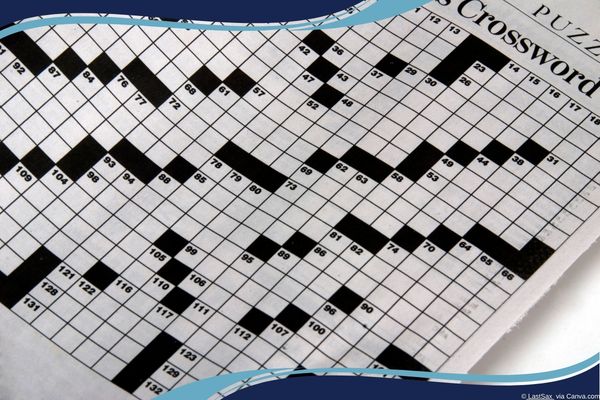
Why A Multi-Billion-Dollar AI Cannot Solve A High School Crossword Puzzle
By Vicky Sidler | Published 29 May 2026 at 12:00 GMT+2
As a small service business owner, are you terrified of competing against massive corporations that are desperately trying to automate their entire workflow with Artificial Intelligence? Well, you can officially stop panicking, because their multi-billion-dollar software is actually incredibly stupid, and you can easily exploit it.
This was not meant to be a serious scientific experiment. I was sitting with a crossword puzzle, hit a wall, and almost as a reflex, I decided to ask the machines for help. Out of mild curiosity, I fed clues into ChatGPT, Claude, Gemini, and Perplexity. The results were not just wrong; they were hilariously, structurally pathetic.
Every single one of these digital geniuses gave me answers with the completely wrong number of letters. Some offered words that were physically impossible given the crossing letters already on the board. At least one model confidently supplied an answer, and when I pointed out the error, it aggressively supplied a completely different word with the exact same unearned confidence and absolutely zero acknowledgment that it had just contradicted itself. One of them just invented a word that doesn't exist in the English language.
These are supposedly the most sophisticated AI tools available to the general public. They can draft an airtight legal contract, explain complex corporate tax structures, and write functional software code in seconds. But not a single one of them could fill in a five-letter word for "type of jazz" that actually fit the space. The crossword completely broke them.
As a StoryBrand Certified Guide, I am constantly warning businesses not to blindly trust algorithmic shortcuts. Understanding exactly why the machine failed at a children's word game is one of the most useful things you can know as a business owner. Let's rip apart the absolute absurdity of "tokenization," explore why the tech industry is passing off narrow intelligence as a sentient brain, and discuss how you can use undeniable human authority to completely obliterate your robotic competitors.
TL;DR:
AI models fail spectacularly at crosswords because they do not read individual letters; they read statistical "tokens," resulting in length errors up to 59.9% of the time.
Modern AI is just narrow intelligence wearing a generalist costume. It is a next-token predictor, not a constraint-satisfaction engine capable of spatial reasoning.
Most business tasks do not come with a grid to check against, meaning AI will confidently hallucinate structural errors in your workflow that are incredibly easy to miss.
👉 Your customers are absolutely exhausted by frustrating, generic corporate chatbots and automated slop that lacks basic human logic. The fastest way to steal market share from these massive corporations is to prove you actually have a pulse. Stop fighting robots on their own turf and establish undeniable human authority instantly with the 5-Minute Marketing Fix.
Table of Contents
Why A Multi-Billion-Dollar AI Cannot Solve A High School Crossword Puzzle
Why Does A Supercomputer Hallucinate Basic Spelling?
Is This Just A Bug They Will Fix In The Next Update?
Are We Actually Dealing With Artificial General Intelligence?
How Do You Protect Your Business When There Is No Grid?
1. Why The Public Is Literally Revolting Against AI (And How To Cash In)
2. Why Paying $32 Billion For Fake AI Influencers Will Destroy Your Brand
3. Why Disney Just Fired Marvel’s Artists For AI Slop They Can’t Even Legally Own
4. Why Obsessive Corporate Cost-Cutting Is Destroying Your Brand Value
5. Why The Internet Is Drowning In AI Slop (And How To Keep Your StoryBrand Clean)
1. Why can't AI models solve a simple crossword puzzle?
2. What does tokenization mean?
3. Will AI get better at solving crosswords in the next update?
4. Is ChatGPT an example of Artificial General Intelligence (AGI)?
5. How does this AI flaw relate to the StoryBrand framework?
Why Does A Supercomputer Hallucinate Basic Spelling?
You might naturally assume that a machine capable of writing functional Python code in three seconds can easily count the letters in a simple word, but you would be entirely wrong.
To understand this hilarious failure, you have to understand something called "tokenization." AI does not actually read words the way a human being does. It reads tokens, which are clusters of characters grouped by statistical frequency in their training data. For example, when you type the word "strawberry," the AI processes it as two distinct tokens: "straw" and "berry." The model never actually sees the individual letters. It is looking at shapes of meaning, not characters on a page.
A crossword puzzle is a purely character-level problem, entirely governed by spatial constraints that operate at the letter level. This is exactly where Large Language Models (LLMs) are architecturally weakest. Peer-reviewed research from the Indian Statistical Institute confirms that even state-of-the-art models produce length errors 46.4% to 59.9% of the time. The machine knows what a word means; it just literally cannot tell you how many letters are in it.
Is This Just A Bug They Will Fix In The Next Update?
Tech executives desperately want you to believe that this is just a minor, temporary glitch that will vanish in the next multi-billion-dollar software patch, but this flaw is baked into the foundation.
This is not a bug; it is the architecture. LLMs are, at their absolute core, next-token predictors. They are extraordinarily good at inferring meaning and generating coherent prose because they process the statistical relationships between meaning-units. But the moment you assign a task that requires manipulating individual characters—like counting letters, fitting an exact grid, or solving an anagram—you have stepped completely outside the architecture's native domain.
Research published at Stanford confirms this is not a simple gap to close, noting that crosswords are an extremely difficult task for LLMs precisely because the constraints break them. A purpose-built crossword AI does exist—a program named Dr. Fill won a US crossword competition in 2021—but it isn't a language model. It is a highly specialized constraint-satisfaction system. It does one thing extremely well, and it cannot do anything else. That distinction matters enormously.
Are We Actually Dealing With Artificial General Intelligence?
The absolute greatest magic trick the tech industry ever pulled was convincing the general public that a glorified autocomplete machine is actually a sentient, all-knowing brain.
Here is the brutal truth that most AI marketing aggressively hides from you: every AI tool you currently use is narrow intelligence wearing a generalist costume. IBM's official taxonomy is incredibly blunt about this, stating that even OpenAI's ChatGPT is considered a form of Narrow AI because it is limited strictly to text-based chat. Artificial General Intelligence—the kind that can actually reason across novel domains like a human being—remains entirely theoretical. Nobody has built it.
Modern LLMs are confusing because their narrow domain is extremely wide. They can write, code, summarize, and translate, creating a very convincing illusion of general intelligence. But the crossword reveals the frayed edge of the costume. The exact moment you need to count characters, hold a grid in mind, and reason about intersecting spatial positions simultaneously, the model reliably fails. The task simply falls outside what it was built to do.
How Do You Protect Your Business When There Is No Grid?
You cannot afford to blindly trust a piece of software that confidently lies to you just because it sounds highly professional.
This is not an argument for distrust; it is an argument for appropriate trust. LLMs are genuinely excellent at tasks that live inside language, like drafting, editing, and summarizing. But they are structurally weak at tasks that require precise counting, working memory across multiple interdependent variables, or exact spatial reasoning. If you use AI for strategic competitive analysis that requires constraint satisfaction across multiple real-world variables, the model will do exactly what it did with my crossword clues: produce something that sounds incredibly confident, but is structurally incorrect.
The crossword is a highly useful test precisely because the errors are so visible. Seven letters crammed into a five-letter space is an undeniable failure. But here is the terrifying part: most business tasks don't come with a grid to check against.
You need a clear, structural foundation to protect your brand from unseen automated errors. Get my 5-Minute Marketing Fix. This rapid diagnostic tool uses your actual human brain to craft a crystal-clear StoryBrand One-Liner. It gives you a standardized, reliable framework to establish genuine human connection. You cannot beat a billion-dollar algorithm at its own game, but you can easily beat it with empathy. Prove to your customers that you aren't just another lazy corporation pushing unchecked AI slop, but a fiercely human Guide who actually has a plan to solve their problem.
👉 Stop publishing automated garbage. Download the fix now.
Related Articles:
1. Why The Public Is Literally Revolting Against AI (And How To Cash In)
The public backlash against AI has exploded into a literal rebellion. Discover why consumers are rejecting tech billionaires and how your human brand can steal their market share.
2. Why Paying $32 Billion For Fake AI Influencers Will Destroy Your Brand
The influencer market is hitting $32B, and corporate executives are replacing humans with AI avatars. Discover why faking human connection is a massive trap that will bankrupt your brand.
3. Why Disney Just Fired Marvel’s Artists For AI Slop They Can’t Even Legally Own
Disney laid off 1,000 workers, including Marvel's legendary visual team, while partnering with OpenAI. Discover the hilarious legal trap of trading your human creativity for cheap, uncopyrightable content.
4. Why Obsessive Corporate Cost-Cutting Is Destroying Your Brand Value
Is your company replacing human value with AI cost reduction? Discover why the "Doorman Fallacy" is ruining modern business and how to fiercely protect your customer loyalty.
5. Why The Internet Is Drowning In AI Slop (And How To Keep Your StoryBrand Clean)
If you think automating your company's creative output is a shortcut to growth, think again. Uncover the Stanford research proving that relying on automated corporate-speak actively destroys your human authenticity.
FAQs:
1. Why can't AI models solve a simple crossword puzzle?
AI models process text through a system called "tokenization," where words are broken down into statistical chunks of meaning rather than individual letters. Because a crossword puzzle requires exact letter counts and spatial reasoning, it breaks the architecture of the AI.
2. What does tokenization mean?
Tokenization is the process by which a Large Language Model converts text into the units it processes. For example, the AI sees the word "strawberry" as two distinct tokens ("straw" and "berry"), meaning it never actually "sees" or counts the individual letters.
3. Will AI get better at solving crosswords in the next update?
No, because this is an architectural flaw, not a temporary bug. Large Language Models are built to be "next-token predictors" for language generation, not constraint-satisfaction engines built for spatial reasoning and exact character counts.
4. Is ChatGPT an example of Artificial General Intelligence (AGI)?
No. According to IBM's official taxonomy, ChatGPT and similar models are forms of Narrow AI. While their ability to process vast amounts of text makes them seem highly intelligent, they are merely "narrow intelligence wearing a generalist costume."
5. How does this AI flaw relate to the StoryBrand framework?
The StoryBrand framework emphasizes that your brand must act as a competent, trustworthy Guide. Because AI models confidently hallucinate structural errors when pushed outside their native language domain, businesses that rely entirely on automation will inevitably publish mistakes that destroy consumer trust.

Strategic Marketing Tribe helps established service businesses turn underperforming marketing into more predictable growth with the Failure-Proof Marketing System.






Created with clarity (and coffee)