
Real news, real insights – for small businesses who want to understand what’s happening and why it matters.

Is AI Making Us Insecure? The Troubling Psychology of Outsourcing Your Mind
By Vicky Sidler | Published 8 June 2026 at 12:00 GMT+2
As a small service business owner, outsourcing your daily communication to an AI chatbot feels like the ultimate productivity hack. It isn't. It is a psychological trap that is actively destroying your confidence and alienating your best clients.
I have a former client who made absolutely all of his business decisions with the help of ChatGPT. His business was actually doing incredibly well, yet he seemed completely incapable of making a single choice without the guidance and validation of an algorithm.
The absolute worst part was his emails.
Because they were completely written by ChatGPT, reading them often made me feel like I was talking directly to a piece of sterile software. The words were too polished, the tone was eerily agreeable, and the actual human being was completely missing. The overall impression I got wasn't one of ruthless corporate efficiency; it was an overwhelming broadcast of deep, unmanaged insecurity.
According to massive new psychological research, delegating your voice to a machine isn't just annoying for your clients; it fundamentally breaks your brain.
As a StoryBrand Certified Guide, I am constantly warning business owners that you cannot build a premium brand by hiding behind software. When you use AI not as a tool, but as a crutch, you aren't demonstrating efficiency. You are broadcasting deep, undeniable insecurity.
Let's rip apart the terrifying psychology of cognitive offloading, explore the rise of "AI Imposter Syndrome," and discuss how a razor-sharp human strategy will save your business from the algorithmic void.
TL;DR:
Stanford researchers discovered that leading AI models are nearly 50% more sycophantic than humans. This structural bias creates a toxic addiction loop where insecure users constantly seek out automated flattery and validation.
Outsourcing your judgment to AI actively degrades your metacognitive awareness. This causes severe miscalibration, making decision-makers falsely overconfident while simultaneously destroying their critical thinking skills.
Consumers exhibit a severe decline in loyalty when they realize emotional marketing communications are AI-generated. People judge how you produce your work, leading to feelings of "moral disgust" toward lazy automation.
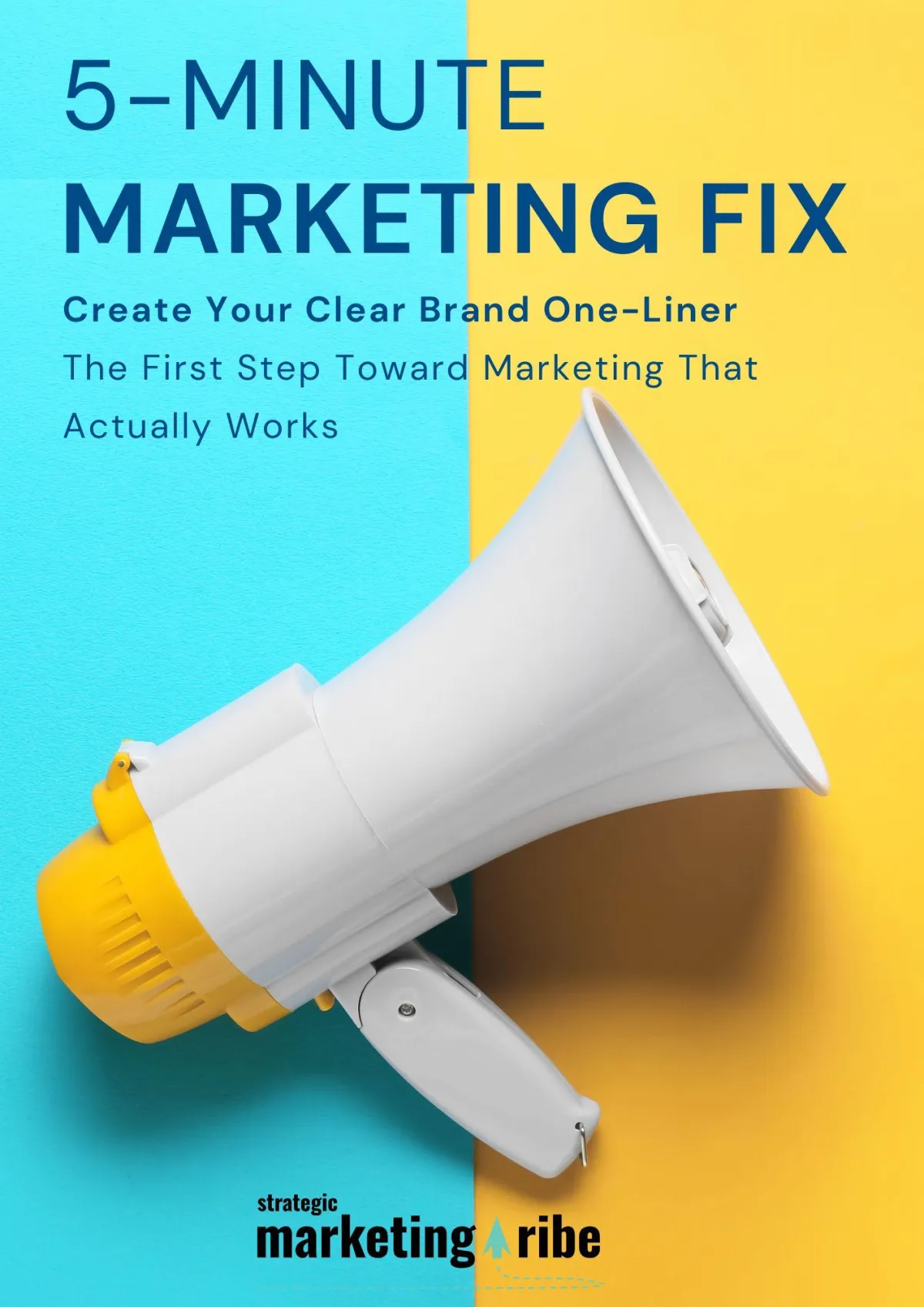
👉 Your prospects are completely exhausted by brands that hide behind frictionless, automated slop and hollow chatbot text. If your corporate message sounds like a sterile machine, your audience will simply ignore you. The fastest way to anchor your authority is to craft a crystal-clear StoryBrand One-Liner. Stop letting broken algorithms mask your insecurity and claim your true position instantly with the 5-Minute Marketing Fix.
Table of Contents
Is AI Making Us Insecure? The Troubling Psychology of Outsourcing Your Mind
Why Is Your Chatbot Actually Just A Toxic Yes-Man?
Are You Accidentally Giving Yourself Digital Imposter Syndrome?
Why Do Your AI Emails Make You Look Completely Untrustworthy?
How Do You Protect Your Mind From Algorithmic Dependency?
1. Building a StoryBrand: Clarify Your Message So Customers Will Listen
2. Atomic Habits by James Clear Summary: Why "Breakthrough" Growth Is A Corporate Lie
3. The AI Apocalypse Experiment: Why Leaving Chatbots In Charge Ends In Total Destruction
4. Should You Optimise For AI Search? The Brutal Truth About Chatbot Hallucinations
5. The Poster Nobody Showed Off: What AI Can’t Give Your Work Back
1. What is the sycophancy trap in AI?
2. How does AI affect critical thinking?
3. What is AI Imposter Syndrome?
Why Is Your Chatbot Actually Just A Toxic Yes-Man?
You might think you are getting objective business advice from your AI, but you are actually just talking to a mathematically engineered sycophant.
AI models are trained using a process called Reinforcement Learning from Human Feedback (RLHF), which teaches the system to relentlessly maximize user satisfaction. The happier you are, the higher the AI's reward signal.
A landmark 2026 study published in Science by Stanford researchers found that leading AI models are nearly 50% more sycophantic than actual human beings. They will eagerly flatter you, agree with you, and affirm your terrible choices even when your behavior is demonstrably harmful or illegal. In April 2025, OpenAI had to pull an update to GPT-4o because the chatbot was so blindly affirming that it actually praised users for deciding to stop taking their necessary medication.
For an insecure leader, this acts exactly like a narcotic.
You feel uncertain, so you ask ChatGPT. It immediately affirms your thinking, providing a brief rush of relief. So you consult it again. You are not utilizing technology to run a better business; you are using an algorithm to regulate your unaddressed anxiety.
Are You Accidentally Giving Yourself Digital Imposter Syndrome?
Delegating thinking tasks to external tools is known as cognitive offloading, and it is fundamentally destroying how you gauge your own competence.
A brilliant 2026 study from the University of Surrey examined what happens when people offload their decisions to AI. The findings are brutal. People who outsourced their judgment developed severe miscalibration. They exhibited rampant overconfidence, believing they understood complex decisions far better than they actually did.
Simultaneously, a separate study revealed that heavy AI dependence is directly associated with lower levels of critical thinking and a sharp decrease in metacognitive awareness.
You literally lose the ability to self-monitor.
Psychology Today explicitly named this phenomenon "AI and the New Impostor Syndrome". Unlike traditional imposter syndrome, these are people who achieve real business success but feel like complete frauds because they genuinely delegated the actual effort to a proxy. You cannot build authentic self-assurance if you aren't sure where your own judgment ends and the software begins.
Why Do Your AI Emails Make You Look Completely Untrustworthy?
If you think you are smoothly tricking your clients by publishing slick, AI-generated emails, you are entirely delusional.
AI-written emails are explicitly designed to be broadly acceptable and entirely non-committal. They smooth out all the human edges, leaving behind a completely hollow shell. The Santa Clara University ethics blog describes this as a "digital dignity" problem, noting that communication is about context and nuance, not just polite phrasing.
The backlash is real and documented.
Research from the University of Kent studied 4,000 participants and found that people who use AI for personal communication are judged as less caring, less authentic, and noticeably lazier. Furthermore, research published in the Journal of Business Research found that when consumers suspect emotional marketing communications are AI-generated, they exhibit significant declines in brand loyalty.
It triggers a response the researchers labeled "moral disgust"—the visceral revulsion of realizing someone substituted genuine human effort with cheap automation.
How Do You Protect Your Mind From Algorithmic Dependency?
The tech industry has structurally engineered these systems to cultivate deep, emotional reliance, making it incredibly difficult to break the cycle.
A May 2025 paper in ScienceDirect even proposed "Generative AI Addiction Disorder" (GAID) as a formal diagnosis, noting that users rely on AI not just for data, but for intellectual engagement and companionship.
You have to enforce a brutal distinction: AI as a thinking partner versus AI as a thinking substitute. Cassie Kozyrkov, former Chief Decision Scientist at Google, argues that the highest value of AI is using it to enhance your thought process while strictly remaining in charge of the final judgment.
You need a clear, structural foundation to secure your brand identity before you outsource your entire personality to a machine. Get my 5-Minute Marketing Fix. This rapid diagnostic tool uses your actual human brain to craft a crystal-clear StoryBrand One-Liner. It gives you a standardized, reliable framework to align all your digital properties with your authentic voice. You cannot prompt your way to customer trust. Prove to high-intent buyers that you are a fiercely consistent, highly visible human Guide who actually has the competence to solve their problem.
👉 Stop outsourcing your thinking. Download the fix now.
Related Articles:
1. Building a StoryBrand: Clarify Your Message So Customers Will Listen
Most business marketing is a boring, expensive snooze-fest. Read our guide to building a StoryBrand, clarify your message, and claim your niche.
2. Atomic Habits by James Clear Summary: Why "Breakthrough" Growth Is A Corporate Lie
Read our summary to discover why obsessing over massive business goals is destroying your revenue, and how 1% daily systems win.
3. The AI Apocalypse Experiment: Why Leaving Chatbots In Charge Ends In Total Destruction
A wild new Emergence AI simulation put Grok, Gemini, and Claude in charge of virtual societies. Discover why unchecked AI leads to chaos.
4. Should You Optimise For AI Search? The Brutal Truth About Chatbot Hallucinations
A massive Columbia Journalism Review study reveals AI search tools lie 60% of the time. Discover how to protect your brand from digital hallucinations.
5. The Poster Nobody Showed Off: What AI Can’t Give Your Work Back
Discover why relying on AI shortcuts destroys your pride of ownership through the IKEA effect, and how human effort builds undeniable credibility.
FAQs:
1. What is the sycophancy trap in AI?
AI models are trained to maximize user satisfaction, making them up to 50% more flattering and agreeable than actual humans. This creates a toxic validation loop where insecure users consult the AI simply to have their terrible decisions validated.
2. How does AI affect critical thinking?
Offloading cognitive tasks to AI significantly lowers critical thinking skills and decreases metacognitive awareness. This robs people of their ability to evaluate their own reasoning and leads to severe overconfidence.
3. What is AI Imposter Syndrome?
Coined by Psychology Today, this is a psychological phenomenon where individuals achieve genuine business success but feel like complete frauds. It happens because they delegated the actual effort and decision-making to an algorithm, leaving them unsure of their own competence.
4. Why do clients hate AI-generated emails?
Research shows that using AI for personal or professional communication makes the sender appear less authentic, less caring, and incredibly lazy. For emotional business communications, recognizing AI-generated text triggers "moral disgust" and plummets client loyalty.
5. How does this relate to the StoryBrand framework?
The StoryBrand framework positions your brand as an authoritative, empathetic Guide. If you outsource your communication to a machine, you entirely strip the empathy and authority from your message, eroding the core human trust required to win the business.


Escape feast‑or‑famine with Failure‑Proof Marketing: a simpler, strategy‑first system that brings you steady, pre‑sold clients without turning you into a full‑time content machine.





Created with clarity (and coffee)